













Methotrexate: An Established Antimetabolite Chemotherapy in Leukemia, Lymphoma, Osteosarcoma, and Other Cancers
Key takeaways
- Methotrexate blocks folate-dependent pathways needed for DNA synthesis and cellular replication.
- Dosing varies enormously, from low oral weekly doses to high-dose IV regimens measured in grams per square meter.
- High-dose methotrexate requires leucovorin rescue, IV hydration, urinary alkalinization to pH ≥7, renal monitoring, and serial serum methotrexate levels.
- Preservative-free methotrexate must be used for intrathecal administration.
- Delayed clearance caused by renal dysfunction can produce life-threatening toxicity; glucarpidase may be required when toxic concentrations persist with impaired renal clearance.
- Methotrexate remains a core drug in leukemia, lymphoma, osteosarcoma, CNS-directed therapy, and gestational trophoblastic neoplasia.
Methotrexate is an antifolate antimetabolite used in both oncology and non-oncology settings. In cancer treatment, it is used in acute lymphoblastic leukemia, non-Hodgkin lymphoma, osteosarcoma, breast cancer, head and neck cancer, gestational trophoblastic neoplasia, and central nervous system–directed therapy. It is available in oral and injectable formulations and may be administered intravenously, intramuscularly, or intrathecally depending on the indication.
This article aims to review methotrexate’s mechanism of action, dose, administration, supportive-care requirements, pharmacokinetics, clinical role, safety profile, approval status, and current use in oncology.
Methotrexate Key Facts
- Generic name: Methotrexate
- Common abbreviation: MTX
- Drug class: Antimetabolite; antifolate; dihydrofolate reductase inhibitor
- Administration: Oral, intravenous, intramuscular, or intrathecal
- Main oncology uses: ALL, meningeal leukemia, non-Hodgkin lymphoma, osteosarcoma, breast cancer, head and neck cancer, and gestational trophoblastic neoplasia
- High-dose therapy: Typically ≥500 mg/m², requiring leucovorin rescue
- Osteosarcoma dose: Typically 12 g/m² IV over 4 hours, maximum 20 g per dose
- Intrathecal use: Preservative-free formulation only
- Important supportive care: Hydration, urine alkalinization, serum methotrexate monitoring, and leucovorin rescue for high-dose treatment
- Major toxicities: Myelosuppression, mucositis, nephrotoxicity, hepatotoxicity, pulmonary toxicity, neurotoxicity, infection, and embryo-fetal toxicity
- Approval status: FDA approved.
What Is Methotrexate?
Methotrexate is a folate analog and antimetabolite chemotherapy that inhibits folate-dependent pathways required for DNA synthesis and cell division.
Its oncology uses include:
- Acute lymphoblastic leukemia
- Meningeal leukemia prophylaxis and treatment
- Non-Hodgkin lymphoma
- Osteosarcoma
- Breast cancer
- Squamous cell carcinoma of the head and neck
- Gestational trophoblastic neoplasia.
Oral methotrexate is also FDA approved for ALL maintenance, mycosis fungoides, and selected relapsed or refractory non-Hodgkin lymphomas.
Methotrexate Mechanism of Action
Methotrexate primarily inhibits dihydrofolate reductase, reducing the availability of reduced folates required for synthesis of purines and thymidylate.
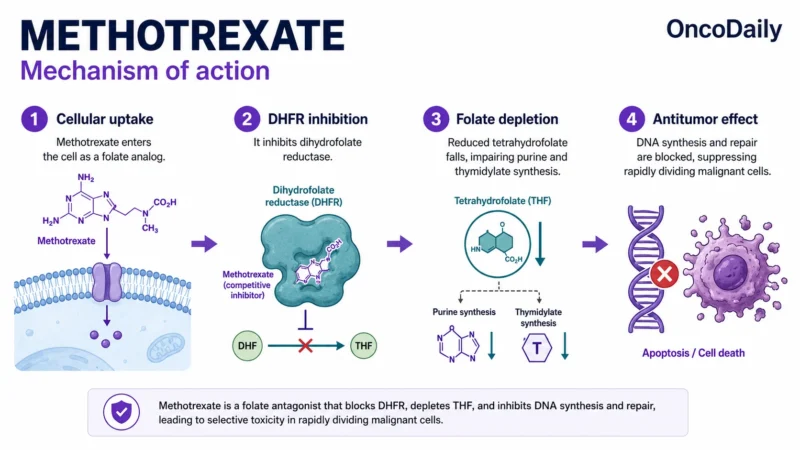
The mechanism involves:
- Cellular uptake of methotrexate
- Inhibition of dihydrofolate reductase
- Reduced tetrahydrofolate availability
- Impaired purine and thymidylate synthesis
- Inhibition of DNA synthesis and repair
- Suppression of rapidly dividing malignant cells.
At high intracellular concentrations, methotrexate and its polyglutamated metabolites can inhibit additional folate-dependent enzymes, prolonging antitumor activity.
What Is the Dose of Methotrexate?
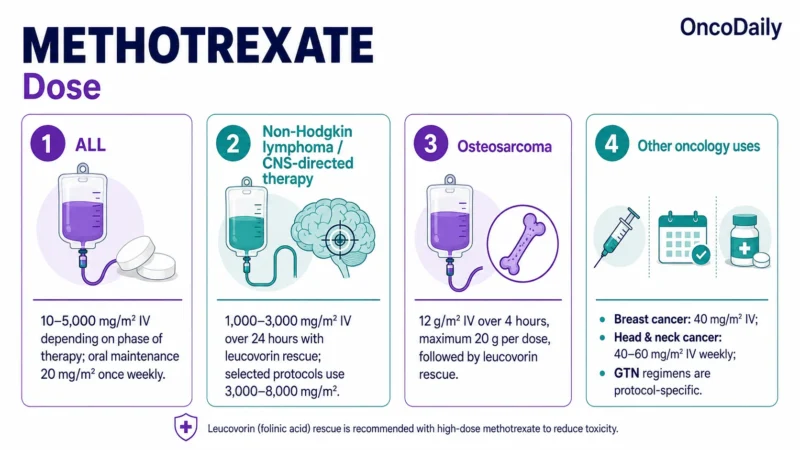
Methotrexate dosing is highly indication-specific.
Acute Lymphoblastic Leukemia
Injectable methotrexate may be used at doses ranging from approximately:
10–5,000 mg/m² IV, depending on the phase of therapy and combination regimen.
For oral maintenance therapy:
20 mg/m² orally once weekly as part of combination chemotherapy.
Non-Hodgkin Lymphoma
Recommended regimens include:
- 1,000 mg/m² or 3,000 mg/m² IV over 24 hours with leucovorin rescue
- CNS-directed regimens of 3,000–8,000 mg/m²
- Up to 8,000 mg/m² IV over 4 hours in selected CNS-directed protocols.
Osteosarcoma
The typical high-dose regimen is:
Methotrexate 12 g/m² IV over 4 hours, with a maximum of 20 g per dose, followed by leucovorin rescue.
Breast Cancer
A labeled combination-therapy dose is:
40 mg/m² IV as part of a cyclophosphamide- and fluorouracil-containing regimen.
Head and Neck Cancer
The recommended single-agent range is:
40–60 mg/m² IV once weekly.
Gestational Trophoblastic Neoplasia
For low-risk disease, labeled regimens include:
30–200 mg/m² or 0.4–1 mg/kg IV or IM.
For high-risk GTN:
300 mg/m² IV over 12 hours as part of combination therapy.
These doses are not interchangeable and must follow the disease-specific protocol.
How Is Methotrexate Administered?
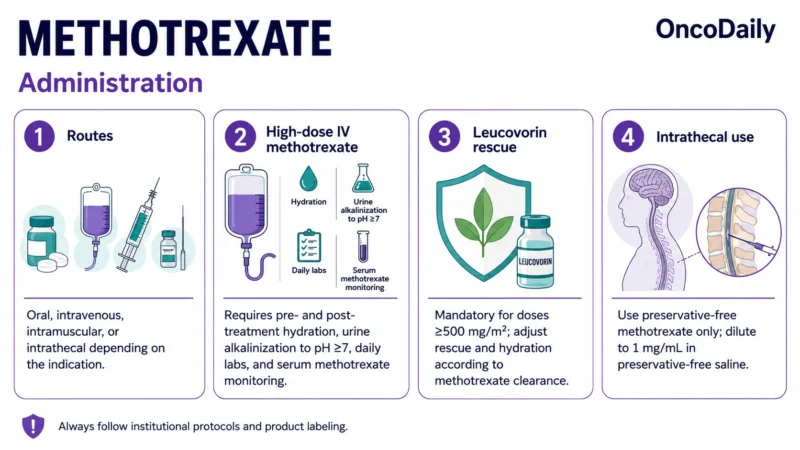
Methotrexate may be given:
- Orally
- Intravenously
- Intramuscularly
- Intrathecally.
High-Dose Intravenous Methotrexate
For high-dose therapy:
- Begin IV hydration before treatment
- Continue hydration throughout therapy
- Alkalinize urine to maintain pH ≥7
- Measure serum creatinine and electrolytes at baseline and at least daily
- Monitor methotrexate concentrations at least daily
- Adjust leucovorin and hydration according to clearance.
Intrathecal Methotrexate
Only preservative-free methotrexate should be administered intrathecally.
The label specifies dilution to:
1 mg/mL in preservative-free 0.9% sodium chloride.
Intrathecal dosing is age-based and frequency depends on whether methotrexate is being used for treatment or prophylaxis.
Watch more: Managing High-Dose Methotrexate Toxicity — focused on methotrexate clearance and toxicity management, particularly relevant to high-dose treatment.
Does Methotrexate Require an In-Line Filter?
There is no universal in-line-filter requirement across all methotrexate formulations and routes.
Filter use should follow:
- The specific product label
- The oncology protocol
- Institutional pharmacy procedures
- The route and infusion system being used.
Intrathecal administration requires particular attention to preservative-free preparation but does not rely on a universal filter rule.
Is Premedication Required?
Methotrexate does not have one universal premedication regimen.
However, high-dose therapy requires mandatory supportive treatment, including leucovorin rescue.
The current label states:
Give leucovorin rescue for doses ≥500 mg/m²
Consider leucovorin for doses 100 to <500 mg/m²
Provide hydration and urine alkalinization
Monitor serum methotrexate levels.
Antiemetics may also be used according to the emetogenic risk of the complete regimen.
Are Dose Reductions Used?
Yes.
Methotrexate may be held, reduced, or discontinued for:
- Delayed drug clearance
- Acute kidney injury
- Severe mucositis
- Neutropenia
- Thrombocytopenia
- Severe infection
- Hepatotoxicity
- Pulmonary toxicity
- Neurotoxicity
- Serious dermatologic toxicity.
For high-dose therapy, dose adjustment is often based not only on toxicity grade but also on measured methotrexate concentrations and renal function.
What Is Known About Methotrexate Pharmacokinetics?
Methotrexate is eliminated largely through the kidneys, and impaired renal function can substantially delay clearance.
Important pharmacokinetic features include:
- Variable oral bioavailability
- Predominantly renal elimination
- Intracellular polyglutamation
- Longer intracellular retention than plasma persistence
- Delayed clearance in renal dysfunction
- Accumulation in third-space fluids such as pleural effusions or ascites.
Because systemic exposure can become highly variable during high-dose therapy, serum concentration monitoring is essential.
Are Renal or Hepatic Dose Adjustments Required?
Renal Impairment
Methotrexate elimination is reduced in renal impairment.
The oral label specifically advises close monitoring when creatinine clearance is below 90 mL/min, with dose reduction or discontinuation as appropriate.
For high-dose therapy, acute renal dysfunction can result in severe delayed clearance.
If methotrexate concentrations remain toxic at >1 micromole/L with delayed clearance due to renal impairment, glucarpidase may be indicated.
Hepatic Impairment
Methotrexate pharmacokinetics in hepatic impairment are not well defined.
Patients with hepatic dysfunction may be at increased risk of toxicity and require close monitoring, with dose reduction or discontinuation when appropriate.
What Did Methotrexate Clinical Trials Show?
Acute Lymphoblastic Leukemia
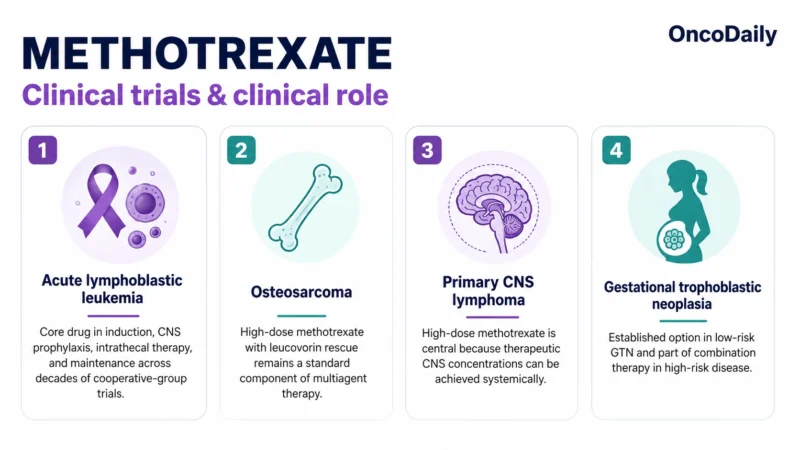
Methotrexate remains a core component of modern ALL therapy, including:
- Systemic combination chemotherapy
- Maintenance therapy
- CNS prophylaxis
- Intrathecal treatment.
Its role is supported by decades of cooperative-group trials rather than a single registration study.
Clinical trial: NCT00408005 — Methotrexate vs High-Dose Methotrexate in ALL Interim Maintenance
Osteosarcoma
High-dose methotrexate with leucovorin rescue remains an established component of multiagent osteosarcoma therapy. The FDA label specifically identifies 12 g/m² over 4 hours as the typical regimen.
Clinical trial: NCT00470223 — Methotrexate-Based Chemotherapy in Osteosarcoma
Primary CNS Lymphoma
High-dose methotrexate is central to many primary CNS lymphoma regimens because sufficiently high systemic doses can achieve therapeutic concentrations in the CNS. NCI trial descriptions continue to use high-dose methotrexate-based regimens in this setting.
Clinical trial: NCT00153530 High-Dose Methotrexate in Primary CNS Lymphoma
Gestational Trophoblastic Neoplasia
Methotrexate is an established treatment for low-risk GTN. NCI describes an 8-day methotrexate/leucovorin regimen using methotrexate on alternating treatment days with leucovorin rescue.
Current Research
NCI currently lists dozens of active or recent cancer trials incorporating methotrexate across hematologic malignancies, CNS lymphoma, breast cancer, and other settings.
Is Methotrexate Approved?
Yes.
Methotrexate injection is FDA approved for multiple malignant diseases, including:
- Acute lymphoblastic leukemia
- Meningeal leukemia
- Non-Hodgkin lymphoma
- Osteosarcoma
- Breast cancer
- Squamous cell carcinoma of the head and neck
- Gestational trophoblastic neoplasia.
Methotrexate tablets are also FDA approved for ALL maintenance, mycosis fungoides, and selected relapsed or refractory non-Hodgkin lymphoma regimens.
What Is the Current Role of Methotrexate?
Methotrexate remains an essential oncology drug despite being one of the oldest antimetabolites in routine use.
Its major modern roles include:
- ALL treatment and maintenance
- CNS prophylaxis and intrathecal therapy
- Primary CNS lymphoma
- Osteosarcoma
- Gestational trophoblastic neoplasia
- Selected lymphoma regimens
- Selected breast and head and neck cancer regimens.
Its clinical usefulness depends heavily on careful supportive care, particularly when high doses are used.
Read more: High-Dose Methotrexate Does Not Reduce CNS Relapse Risk in Ultra High-Risk Large B-Cell Lymphoma on OncoDaily.
What Are the Side Effects of Methotrexate?
Important toxicities include:
- Neutropenia
- Thrombocytopenia
- Anemia
- Infection
- Oral mucositis
- Nausea
- Vomiting
- Diarrhea
- Hepatotoxicity
- Acute kidney injury
- Pulmonary toxicity
- Neurotoxicity
- Severe skin reactions
- Embryo-fetal toxicity.
Myelosuppression
Methotrexate can cause severe bone-marrow suppression. Complete blood counts should be monitored at baseline and during treatment, with dose interruption or reduction when clinically appropriate.
Mucositis
Oral and gastrointestinal mucositis are particularly important with high-dose therapy and may become severe when clearance is delayed.
Nephrotoxicity
High-dose methotrexate can precipitate in renal tubules and cause acute kidney injury, which in turn further delays methotrexate clearance.
Hydration, urinary alkalinization, drug-level monitoring, and leucovorin rescue are therefore central to safe treatment.
Hepatotoxicity
Methotrexate can cause liver-enzyme abnormalities and clinically significant hepatic injury, particularly with prolonged exposure.
Neurotoxicity
Neurologic toxicity may occur after intrathecal or high-dose systemic treatment and can include acute, subacute, or delayed CNS complications.
Written by Mirna Antabian, MD